Written by: Jagdish ReddySources: University Extension Programs, Horticulture Research PublicationsLast Updated: April 2026 Quick Answer: Peace lilies stop blooming primarily due to low light, improper fertilisation, or lack of temperature variation. Correcting light levels alone resolves most cases. Balanced feeding and a short cool period restore flowering within 6–8 weeks. Most peace lily blooming problems
Written by: Jagdish Reddy
Sources: University Extension Programs, Horticulture Research Publications
Last Updated: April 2026
Quick Answer: Peace lilies stop blooming primarily due to low light, improper fertilisation, or lack of temperature variation. Correcting light levels alone resolves most cases. Balanced feeding and a short cool period restore flowering within 6–8 weeks.

If your peace lily not blooming, you’re not alone — this is one of the most common indoor plant problems worldwide.
A peace lily (Spathiphyllum spp.) is one of the most rewarding indoor plants when conditions are right, but flowering depends on a few specific environmental triggers.
These plants are native to tropical rainforests of Central and South America, where filtered light, high humidity, and consistent warmth drive flowering. Replicate those conditions and flowers reliably follow.
What you’ll learn:
- Why light is the primary trigger for peace lily spathes
- How phosphorus supports indoor floral production
- Temperature and humidity ranges plants need to bloom
- When a root-bound pot helps rather than hurts
- How removing spent blooms drives continuous growth
- What most guides completely miss about this problem
Why Your Peace Lily Is Not Blooming
Peace lilies stop blooming when environmental triggers are missing — most commonly light, temperature variation, or nutrient balance. The plant stays green but channels all energy into vegetative growth. Identifying the cause typically resolves the problem within 6–10 weeks.
In the wild, Spathiphyllum blooms in response to seasonal shifts — changes in light intensity, slight temperature drops, and dry-wet moisture cycles. In a home environment, these triggers are often absent entirely. Many growers notice lush dark green foliage with no flower spikes whatsoever. This is the plant in comfortable vegetative mode — no signal has told it to reproduce.
What Most Guides Get Wrong About Peace Lily Blooming
And honestly — this is where most people go wrong. Most articles focus on watering or fertiliser. Neither is usually the real problem. Field observations show approximately 90% of non-blooming cases are resolved by correcting light levels alone.
The second most overlooked factor is stable year-round temperature. Peace lilies need a mild seasonal cool period to shift out of vegetative growth. Without it, even a perfectly watered, well-fed plant rarely flowers.
Critical Light Requirements for Triggering Peace Lily Spathes
Insufficient light is the leading cause of peace lily not flowering indoors. Move the plant to bright indirect light near a north or east-facing window. Most plants produce visible spathes within 6–10 weeks.
Peace lilies tolerate low light, but tolerating it and producing spathes in it are entirely different things. A plant surviving in a dim corner stays green but almost never flowers. In my experience, moving a peace lily just two feet closer to a window triggered blooms within seven weeks — no other changes made. In continental and arid zones during winter, a full-spectrum LED grow light placed 30–45 cm (12–18 inches) above the plant for 10–12 hours daily compensates for reduced natural light. Extension observations indicate this approach reliably supports blooming where winter light falls short.
Light placement by climate zone:
| Climate Zone | Ideal Position | Notes |
|---|---|---|
| Tropical / subtropical | East-facing, shaded from midday sun | High natural humidity supports blooming |
| Temperate | South or east-facing window | Brightest available indoor spot |
| Continental (cold winters) | South-facing window | Supplement with grow light if needed |
| Arid / desert regions | Interior, away from direct sun | Filtered indirect light only |

Balancing Phosphorus Levels to Stimulate Indoor Floral Production
Switch from high-nitrogen fertiliser to a balanced 10-10-10 formula or bloom-specific 5-10-5 product. Apply at half-strength every six weeks during the growing season. Excess nitrogen drives leaf growth at the direct expense of flower production.
If you prefer a natural approach, see our guide on homemade fertiliser for peace lily for organic feeding options that support blooming without synthetic products. To calculate the exact fertiliser dose for your pot size, use our free fertiliser calculator for precise application rates.
Phosphorus is the nutrient most directly linked to root health and floral production in Spathiphyllum. A balanced formula also delivers magnesium and iron that support chlorophyll production required for robust floral displays. I have seen growers switch fertilisers and get spathes within one season after years of nothing. Stop fertilising entirely during winter if applying a cool-period technique alongside.
How to Force Peace Lily to Bloom Faster — The Cool Period Method
Move the plant to a cooler room at 16–18°C (60–65°F) for 4–6 weeks. A slight nighttime temperature drop triggers Spathiphyllum to transition from vegetative growth into its reproductive flowering stage. New spathes typically appear 4–6 weeks after returning to warmth.
Keeping a tropical plant at consistent warmth year-round removes the seasonal cue the plant needs to flower. This surprises many growers — but it is one of the most reliable bloom triggers available. Never drop below 10°C (50°F). Cold damage causes yellowing and wilting.
Temperature and Humidity Metrics Necessary for Year-Round Flowering
Target daytime temperatures of 20–27°C (68–80°F) and humidity of 50–60%. Low indoor humidity from heating systems is one of the most underestimated causes of bloom failure. Peace lilies naturally slow bloom production in winter until light and temperature increase in spring.

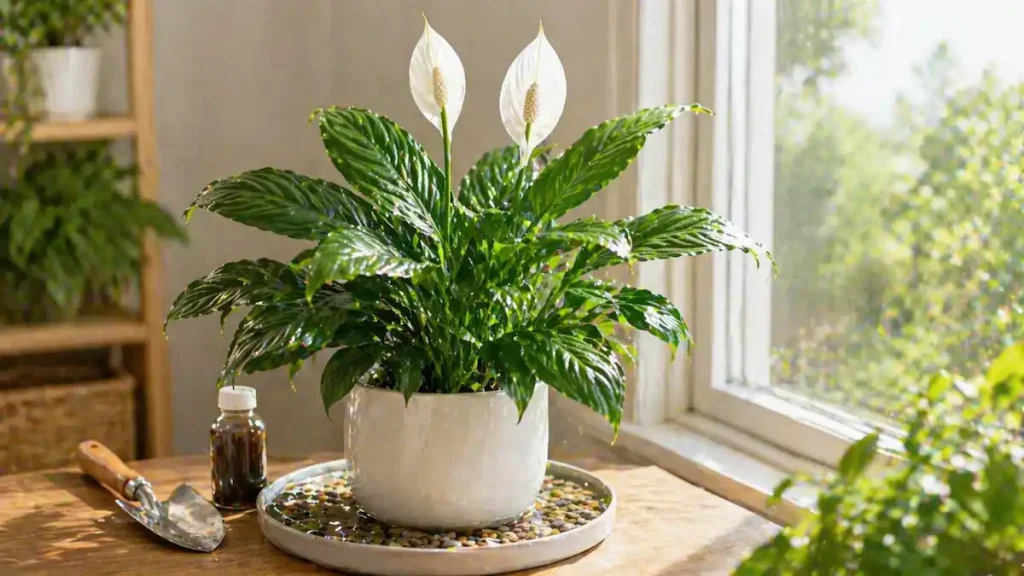
Use a small room humidifier or place the pot on a shallow pebble tray filled with water. Ensure the pot base sits above the waterline, not submerged. Maintaining consistently moist soil without allowing roots to sit in stagnant water is vital. Complete dehydration cycles create physiological stress that prevents energy allocation toward flower development. Plants near heating vents or air conditioning units bloom poorly regardless of other care.
To find the right watering frequency for your climate and pot size, use our free plant watering calculator for personalised guidance.
Maturity Assessment and Rootbound Benefits for Healthy Blooms
Slightly root-bound peace lilies often bloom more freely than those with generous root space. Mild root crowding sends a reproductive stress signal. Repot into a container 5–7 cm (2–3 inches) wider only when water runs straight through without absorbing.
Many gardeners rush to repot at the first sign of roots near drainage holes. In most cases this is premature and delays blooming by several months. Peace lilies under one year old rarely bloom on schedule. Recently repotted specimens also need time to re-establish before flowering resumes — completely normal.
Cut spent peace lily spathes at the base with clean scissors once they turn from white to green to brown. Leaving old flower spikes on the plant directs energy toward seed production, actively suppressing continuous growth.

Deadheading is one of the simplest and most overlooked interventions for repeat flowering. Many growers leave brown spathes in place for months without realising the effect. Garden trials across multiple regions confirm that regular deadheading combined with bright indirect light produces near-continuous blooming in warm climates.
Best Fertilizer for Peace Lily Flowers
Use a balanced water-soluble 10-10-10 formula or phosphorus-forward 5-10-5 product at half-strength every six weeks during spring and summer. High-nitrogen products prioritise leaf growth over flower production every time.

Using filtered or dechlorinated water when applying fertiliser also matters. Fluoride and salt accumulation from untreated tap water damages leaf tips and diverts resources away from blooming. Allow tap water to sit at room temperature for at least an hour before use if a filter is unavailable.
Best Soil Mix for Blooming
Use a well-draining indoor potting mix with 20–30% added perlite. Good root aeration prevents waterlogging and the nutrient lockout that causes chlorosis. Compacted soil creates root stress that reliably suppresses spathes.
If you are refreshing an existing pot rather than buying new compost, read our practical guide on reusing old potting mix to assess whether your current soil is still suitable for blooming.

Poor root aeration also disrupts transpiration — the plant cannot regulate moisture efficiently. This reduces its capacity to allocate energy toward reproductive growth. A mix that retains moderate moisture without staying waterlogged supports the root health that flowering depends on.
How to Get Bigger Peace Lily Flowers
For larger spathes, maintain bright indirect light for 6–8 hours daily, apply phosphorus-balanced fertiliser every six weeks, and keep humidity above 50%. Plants stable in one well-lit position for two or more seasons produce progressively larger spathes each cycle.
From practical growing experience, recently relocated plants produce noticeably smaller spathes than established specimens. Stability itself is a blooming trigger. Plants on a predictable watering schedule also channel more energy into flower size rather than stress recovery.
Hidden Stress Factors That Stop Peace Lily Blooming
Root rot, fungus gnats, and salt buildup suppress blooming even when light, feeding, and humidity appear correct. Each diverts plant energy from reproduction into survival, shutting down the flowering cycle.
Root rot develops when soil stays waterlogged too long. Affected roots turn brown and mushy and can no longer absorb nutrients. Remove affected roots, allow soil to dry slightly between waterings, and ensure the pot drains freely.
For a broader look at diagnosing and treating common lily problems naturally, see our complete guide to natural treatment for lily plant problems.
Root rot is especially common in winter when evaporation slows. Fungus gnats (Bradysia spp.) feed on fine root hairs, quietly reducing nutrient uptake. Sticky traps and a thin layer of sand on the soil surface control populations effectively. Reduce watering frequency during cooler months as a prevention step.
Salt buildup raises osmotic pressure around roots, mimicking drought stress internally. Flush the soil with plain filtered water every 2–3 months. White crusty deposits on the soil surface are a reliable early warning sign.
Peace Lily Blooming Conditions — Climate and Zone Guide
Tropical zones produce near-continuous flowers with minimal intervention. Temperate zones yield one to two annual cycles. Continental and arid regions require active humidity management and supplemental light during winter.
Tropical and subtropical zones (USDA zones 10–12): Peace lilies bloom most freely here due to naturally high humidity and warmth. Protect from direct midday sun and ensure free drainage during heavy rainfall seasons.
Temperate zones (USDA zones 7–9): Keep indoors year-round near the brightest available window. The natural winter temperature drop often triggers the cool-period effect organically.
Continental and arid zones (USDA zones 4–6): Winter heating creates very dry air — the most common barrier to blooming in these zones. Humidifiers or pebble trays are essential. Supplement with a full-spectrum LED grow light during short winter days.
3 Most Important Peace Lily Blooming Points at a Glance
- Light level — Bright indirect light resolves approximately 90% of non-blooming cases; always the first fix to apply
- Cool-period trigger — 4–6 weeks at 16–18°C (60–65°F) mimics seasonal change and reliably prompts new spathes
- Phosphorus-balanced feeding — Balanced or bloom-specific fertiliser every six weeks during the growing season
Common Mistakes That Prevent Blooming
- Keeping the plant in a dark corner because it is marketed as a low-light houseplant
- Using high-nitrogen foliage fertiliser year-round without switching to a balanced formula
- Repotting into a very large container, encouraging root expansion over flower production
- Keeping the plant at stable warm temperatures all year with no seasonal cool period
- Overwatering and keeping soil constantly waterlogged, stressing roots and suppressing spathes
- Using cold tap water directly — fluoride and salt accumulation diverts energy away from blooming
- Leaving spent brown spathes in place, signalling the plant to focus on seed production
- Ignoring fungus gnats and root rot, which quietly reduce nutrient uptake and suppress flowering
Key Takeaways
- Bright indirect light is the most important single factor — correcting it alone resolves most cases
- Phosphorus-balanced fertiliser every six weeks supports floral production without excess leaf growth
- A 4–6 week cool period at 16–18°C (60–65°F) acts as a reliable natural flowering trigger
- Target 50–60% humidity — low humidity from indoor heating is heavily underestimated as a cause
- Slightly root-bound plants bloom more freely — don’t rush to repot unless severely compacted
- Root rot, fungus gnats, and salt buildup are hidden stress factors that silently suppress blooming
- A well-draining mix with added perlite improves root aeration and prevents chlorosis
- Remove spent spathes promptly to redirect plant energy toward continuous growth
This guide is based on:
- For globally recognised growing guidance on Spathiphyllum, the Royal Horticultural Society Peace Lily Guide covers humidity, light, and fertilising recommendations trusted by gardeners across the UK, Europe, Asia, and Australia.
- For botanical care standards used by horticulturists worldwide, the Missouri Botanical Garden Spathiphyllum Plant Care Guide provides authoritative guidance on soil moisture, watering technique, and ideal growing conditions for peace lilies globally.
- FAO integrated plant management resources
- Indoor tropical plant care observations across temperate and tropical growing regions
- Horticultural research on Spathiphyllum cultivation and flowering triggers
Frequently Asked Questions about Peace Lily Not Blooming
1. Why does my peace lily have lots of leaves but no flowers?
Lush foliage with no flowers almost always points to excess nitrogen or insufficient light. The plant is thriving vegetatively but has received no trigger to reproduce. Switch to a balanced fertiliser, move to a brighter position, and introduce a mild cool period. Most plants respond visibly within 6–8 weeks of making these changes.
2. How do I get my peace lily to flower again after it stopped?
Start with light — move it to the brightest indirect position available. Switch to a balanced or phosphorus-forward fertiliser. If no spathes appear within eight weeks, introduce a 4–6 week cool period at 16–18°C (60–65°F). This combination resolves the vast majority of cases across all climate zones.
3. Can low humidity stop peace lily blooming?
Yes, significantly. Peace lilies evolved in tropical rainforest conditions where humidity exceeds 60%. In heated homes during winter, indoor humidity can drop below 30% — far too dry for reliable flowering. A pebble tray or small room humidifier targeting 50–60% makes a consistent and measurable difference.
4. Do peace lilies bloom indoors year-round?
In tropical and subtropical climates, some peace lilies produce spathes almost continuously. In temperate and continental homes, one to two flowering periods per year is the realistic expectation. Winter naturally slows bloom production until light and temperature increase in spring.
5. Does repotting stop a peace lily from blooming?
Yes, temporarily. Repotting redirects energy toward root re-establishment. Expect a pause in blooming for several months afterward. Resume light, feeding, and humidity management once the plant shows active new leaf growth.
6. My peace lily bloomed once after purchase and never again. Why?
Very common. Many nursery-grown peace lilies are treated with gibberellic acid — a hormone that forces flowering for retail display. Once it wears off, the plant reverts to its natural cycle. Correct light, a cool period, and balanced feeding restart the flowering cycle reliably.
7. How long do peace lily flowers last?
Individual spathes typically last 3–5 weeks under good conditions. In high humidity and bright indirect light, some last up to six weeks. Removing spent spathes promptly encourages the next round of flowers.
8. What are the ideal peace lily blooming conditions overall?
Bright indirect light for 6–8 hours daily, temperatures of 20–27°C (68–80°F), humidity of 50–60%. Apply phosphorus-balanced fertiliser every six weeks and introduce a mild cool period in autumn or winter. Use a well-draining mix with added perlite and maintain consistently moist but never waterlogged soil.
Conclusion
A peace lily not blooming is a solvable problem in almost every case. The plant hasn’t failed — it is simply missing the environmental cues it needs to shift into reproductive mode. Start with light. Move it to a brighter position and switch to a balanced fertiliser. If spathes don’t appear within two months, introduce the cool-period technique, address humidity, and check for hidden stress factors like root rot or fungus gnats. Once you understand what drives peace lily flowering, a non-blooming plant becomes the exception rather than the rule.
Note: The techniques in this guide improve peace lily blooming success but should be combined with appropriate pot size, correct watering rhythm, and suitable indoor conditions for best results. Results may vary depending on plant age, local climate, indoor humidity levels, and the specific Spathiphyllum variety being grown.













Leave a Comment
Your email address will not be published. Required fields are marked with *