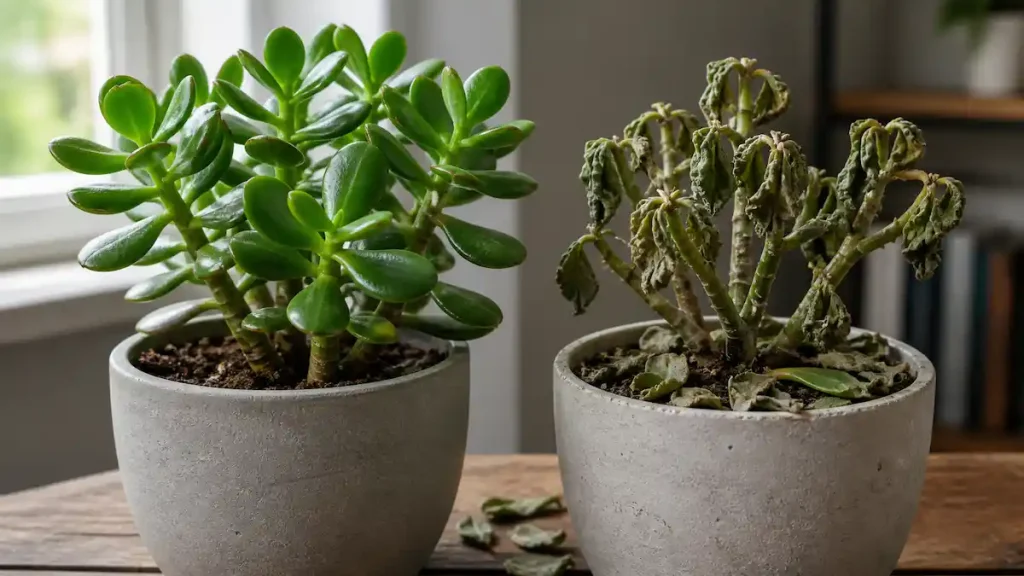
If your jade plant leaves are falling off and wrinkling at the same time, that’s not random — it’s a specific distress signal that means your plant needs attention now. Leaves on the soil, the remaining ones shrunken and deflated: the good news is this is almost always fixable once you identify the cause. Many
If your jade plant leaves are falling off and wrinkling at the same time, that’s not random — it’s a specific distress signal that means your plant needs attention now. Leaves on the soil, the remaining ones shrunken and deflated: the good news is this is almost always fixable once you identify the cause.
Many people search for why their jade plant leaves are wrinkled and falling off or shrinking and dropping simultaneously — both symptoms together usually point to the same underlying issue. The fastest way to fix it is to diagnose correctly first — and you can do that in under 30 seconds using the test below.

Jade plants (Crassula ovata) are known for being tough. They tolerate neglect, bounce back from stress, and can outlive most other houseplants by decades. But they have limits. When leaves start falling off and wrinkling together, the cause is usually one of a handful of problems — and knowing which one applies to your plant is the difference between a quick fix and weeks of guesswork.
This guide covers every major reason jade plant leaves fall off and wrinkle, how to diagnose your situation in seconds, and exactly what to do about it. Most indoor jade plant care problems that cause leaf drop come down to watering mistakes, light imbalance, or sudden environmental changes — and all of them are covered below.
The 30-Second Jade Plant Diagnosis Test
Jade plant leaves falling off and wrinkling usually mean overwatering or underwatering. Soft, mushy leaves indicate root rot, while thin, wrinkled leaves signal dehydration. Checking soil moisture and leaf texture quickly reveals the cause. Most guides confuse the two — this one shows you exactly how to tell in under a minute.
Step 1: Touch the Leaves

- Soft, mushy, or swollen → Overwatering or root rot
- Thin, wrinkled, or papery → Underwatering or drought stress
Step 2: Check the Soil (Finger Test)
- Wet or cold several inches down → Overwatering
- Completely dry throughout → Underwatering
Step 3: Think About Recent Changes
- Recently moved or repotted → Transplant shock
- Near AC, heater, or cold window → Temperature stress. Real example: a jade plant that was fine for months and suddenly drops leaves after being moved next to an air conditioner is almost certainly experiencing temperature shock, not a watering problem.
- No recent changes, watering on schedule → Check for pests or light issues
This quick test prevents misdiagnosis — and treating the wrong problem is one of the fastest ways to make things worse for a struggling jade plant.
Quick Diagnosis: What Your Jade Plant’s Leaves Are Telling You
Use this table to match your specific symptom combination to the most likely cause before taking action.
| Symptom Combination | Most Likely Cause | Urgency |
|---|---|---|
| Soft, mushy leaves + falling off + soggy soil | Overwatering / root rot | High — act now |
| Thin, papery, wrinkled leaves + dry soil + falling | Underwatering / drought stress | Medium — water soon |
| Yellow leaves + falling + soft stems | Overwatering or root rot | High |
| Crispy, shriveled leaves + falling + dry soil | Underwatering or too much direct sun | Medium |
| Sudden mass leaf drop + no soil issues | Temperature shock / cold draft | Medium |
| Leaf drop right after repotting or moving | Transplant shock | Low — usually temporary |
| Sticky residue + webbing + leaf drop | Pests (mealybugs, spider mites) | Medium — treat promptly |
| Only older/lower leaves falling, new growth normal | Normal seasonal shedding | Low — likely fine |
Why Is My Jade Plant Losing Leaves or Dropping Them Suddenly?
If your jade plant is losing leaves suddenly or dropping them after watering, the cause is almost always overwatering, underwatering, or a sudden change in environment. These are the three most common triggers — and the two water-related ones are frequently confused because they produce similar symptoms on the surface. If your jade plant leaves are falling off after watering or even dropping healthy leaves suddenly, the issue is usually related to root stress or environmental shock rather than normal shedding.
Overwatering vs Underwatering — Quick Difference Guide
| Feature | Overwatering | Underwatering |
|---|---|---|
| Leaf texture | Soft, mushy, swollen | Thin, wrinkled, deflated |
| Leaf color | Yellow or translucent | Dull green or slightly faded |
| Soil condition | Wet, soggy, slow to dry | Dry throughout the pot |
| Root condition | Brown/black, mushy (rot) | Dry but firm |
| Smell | Sour or musty | No smell |
| Main risk | Root rot, stem collapse | Dehydration, leaf shriveling |
Always check both leaf feel and soil moisture together — relying on just one can lead to the wrong fix.
1. Overwatering — The Most Common Reason Jade Plant Leaves Fall Off
Overwatering is the number one cause of jade plant leaf drop — and responsible for more failures than anything else. When roots sit in waterlogged soil, they’re cut off from oxygen and start breaking down (root rot). Once that sets in, the plant can’t absorb water or nutrients properly even though the soil is soaking wet. The result: soft, wrinkled, yellowing leaves that fall at the slightest touch. This is also why many people notice jade plant soft leaves falling off after watering — a classic sign of overwatering and root stress.
Why Jade Plant Leaves Go Soft and Mushy
When root rot takes hold, the roots can no longer move water and nutrients efficiently. Leaf cells start breaking down — that’s why overwatered leaves go mushy and translucent before dropping. This is different from underwatering, where leaves shrink but stay firm. Soft, waterlogged-feeling leaves always point to a root problem, not drought.
Signs Your Jade Plant Is Overwatered
- Leaves feel soft, mushy, or swollen rather than firm
- Yellowing starting at the base of the plant and moving upward
- Soil stays wet for more than a week after watering
- A sour or musty smell from the pot
- Stems feel soft near the soil line
How to Check for Root Rot
Unpot the plant and look at the roots. Healthy jade roots are firm, ranging from white to light tan. Rotted roots are brown or black, feel mushy when squeezed, and often smell unpleasant. Don’t panic if you find some — the plant can recover as long as some healthy root tissue remains.

How to Fix Overwatering — Step by Step
- Stop watering immediately. Remove the plant from its pot and let the root ball air out for a few hours.
- Inspect the roots. Trim any black or mushy roots with clean, sterilized scissors back to firm, healthy tissue.
- Dust the cuts. A little cinnamon powder on trimmed root ends acts as a natural antifungal.
- Let it dry. Set the bare-root plant in a warm spot for 24–48 hours before repotting.
- Repot in fresh mix. Use a cactus/succulent mix with added perlite (2:1 ratio). Make sure the pot has drainage holes.
- Wait before watering. Hold off for 7–10 days after repotting to let roots settle.
For more on distinguishing overwatering from underwatering, Agri Farming’s guide on overwatered vs underwatered plants includes a simple finger test that works well for succulents. If you’re trying to save an overwatered jade plant, acting early by trimming rotted roots and switching to well-draining soil makes a full recovery much more likely.
2. Underwatering — Why Jade Plant Shriveling Leaves Drop Even in Dry Conditions
Here’s something most people don’t realize: jade plant leaves are essentially water tanks. The plant stores moisture inside those thick, fleshy leaves specifically for dry periods. When the soil stays dry too long, it starts pulling that stored water back out of the leaves to survive. The leaves deflate, wrinkle, and eventually fall — with bone-dry soil underneath. This is one of the most common causes of soft leaves falling off that gets misdiagnosed as overwatering.

How to Tell Underwatering from Overwatering
Both cause wrinkled, falling leaves — but the feel and soil tell you which direction you’re dealing with:
- Underwatered: Leaves feel thin and papery. Wrinkles run across the whole leaf surface. Soil is dry all the way through. The plant looks deflated but not discolored.
- Overwatered: Leaves feel soft and mushy, possibly yellow or translucent. Soil is wet or smells sour. Lower leaves are affected first.
How to Rehydrate a Drought-Stressed Jade Plant
Don’t flood a drought-stressed plant all at once — that can shock the roots. Use the soak-and-drain method instead: water slowly until it runs from the drainage holes, let the pot drain fully, then leave it alone. Check the soil every few days. Within a week, the remaining leaves should start to plump back up.
Jade Plant Watering Schedule by Season
| Season | Watering Frequency | Soil Check Before Watering |
|---|---|---|
| Spring / Summer (growing season) | Every 2–3 weeks | Top 2 inches dry |
| Autumn (slowing down) | Every 3–4 weeks | Top 3 inches dry |
| Winter (dormancy) | Once a month or less | Soil almost completely dry |
Never water on a fixed calendar — always check first. Stick your finger 2 inches into the soil; if it still feels damp, wait a few more days. The University of Connecticut Extension advises cutting both the amount and frequency of watering significantly in winter, when growth naturally slows.
What’s Happening Inside Your Jade Plant (Simple Explanation)
These succulent leaves store water, acting like small reservoirs. When something disrupts the plant’s ability to absorb or retain that water, the leaves are the first to show it — through wrinkling, softening, or dropping.
- Overwatering: Roots sit in water and begin to rot → oxygen is cut off → water and nutrients can’t move → leaf cells break down → leaves turn soft, wrinkle, and fall
- Underwatering: The plant pulls stored water from its own leaves to survive → leaves shrink, wrinkle, and eventually drop
- Environmental stress (light or temperature): The plant sheds leaves to conserve energy and reduce water loss — a defensive response, not a watering problem
This is why leaves wrinkling and dropping together almost always points to a water imbalance or root issue. If you’re trying to revive a wrinkled jade plant, fixing the water situation first is the right move — everything else follows from there.
3. Too Much or Too Little Light — A Stress Trigger Most People Miss
Jade plants need 4–6 hours of bright indirect light daily. Too little causes weak, dropping leaves. Too much direct sun — especially through glass — scorches leaves and triggers defensive shedding. Moving the plant to a brighter spot, or stepping it back from harsh afternoon sun, is often all that’s needed.
Signs of Light Stress in Jade Plants
- Too little light: Leaves go pale, lose color saturation, and drop from leggy, stretched stems. The plant looks like it’s reaching toward the window.
- Too much direct sun: Brown or white scorch patches appear on leaves. Affected leaves dry out, curl, and fall. Common when a jade plant sits directly against a south-facing window in summer.

Best Indoor Placement for Jade Plants
A south- or east-facing windowsill works best. Jade plants want bright light but not punishing midday sun through glass, which magnifies heat and UV intensity. If a west-facing window is your only option, a thin sheer curtain takes the edge off the harshest afternoon rays.
4. Temperature Shock and Cold Drafts — Sudden Leaf Drop Explained
Jade plants prefer temperatures between 65–75°F (18–24°C). Cold drafts from windows or air conditioning, or temperatures below 50°F (10°C), can trigger rapid leaf drop — often with no other warning signs. Keep them away from cold windows and vents in winter.

Temperature-related drop tends to be sudden — a plant that looked fine yesterday has a pile of leaves on the soil by morning. If you’ve recently moved it, had a cold snap, or placed it near an AC vent or drafty window, that’s almost certainly why.
Winter Leaf Drop — Normal vs Problem
Some leaf loss in winter is normal. They slow down in cooler months and shed a few older leaves as part of that cycle. What’s not normal is heavy loss across the whole plant — especially if the leaves are wrinkling before they drop. That’s stress, usually from cold air, reduced light, or overwatering during dormancy.
How to Protect Your Jade Plant from Temperature Stress
- Keep the plant at least 2–3 feet from cold windowpanes in winter
- Avoid positioning jade plants above or below air conditioning vents
- If nighttime temperatures drop below 55°F (13°C), move the plant to a warmer room
- Don’t leave a jade plant outdoors once temperatures regularly fall below 50°F (10°C)
Why Jade Plant Leaves Fall Off After Moving or in Winter
Jade plants often drop leaves suddenly after being moved indoors, relocated to a different room, or when winter arrives. Changes in light levels, temperature, or airflow can all trigger stress — causing leaves to fall off even when watering is correct. This is one of the most common situational causes that indoor plant owners miss. If your jade plant is losing leaves indoors after a position change, give it 2–3 weeks to adjust before intervening further.
5. Repotting Shock — Why Jade Plants Drop Leaves After Being Moved
Jade plants can drop leaves after repotting or moving to a new spot. Transplant shock — roots temporarily struggling to absorb water and nutrients after disturbance — is the reason. Light leaf drop for 1–2 weeks post-repotting is normal; heavy, ongoing drop suggests something more serious.
Many people repot a struggling plant hoping to help, then see even more leaves go. Usually it’s just adjusting — give it 2–3 weeks of stable conditions before assuming something is wrong.
How to Minimize Transplant Shock
- Only repot when the plant is root-bound or when treating root rot
- Choose a pot just 1–2 inches larger — oversized pots hold excess moisture
- Wait 7–10 days after repotting before watering
- Keep the plant in stable light and temperature after repotting — don’t move it around
- Avoid fertilizing for 4–6 weeks post-repot — stressed roots can’t handle extra nutrients
For more on jade plant repotting and soil mix options, Our jade plant growing guide covers pot selection and drainage in detail.
6. Pests — When Bugs Are Behind the Leaf Drop
Mealybugs, spider mites, and fungal issues can cause leaves to wither, wrinkle, and fall. Check the undersides of leaves and stem joints for white cottony clusters (mealybugs) or fine webbing (spider mites). Catching these early makes treatment straightforward.
Common Jade Plant Pests to Watch For
- Mealybugs: White, fluffy clusters in leaf joints and stem crevices. They suck sap, causing leaves to yellow, wrinkle, and drop. Wipe off with a cotton swab dipped in rubbing alcohol, then follow up with neem oil spray.
- Spider mites: Tiny dots on leaves, usually with fine webbing on the undersides. They thrive in hot, dry indoor conditions. Raise humidity slightly and treat with neem oil.
- Root mealybugs: Live in the soil around roots — harder to spot. White powdery residue on roots when repotting is the giveaway. Wash roots thoroughly and replant in fresh soil.
A prolonged infestation steadily weakens the plant and leads to persistent leaf drop even after other issues are resolved. Check monthly. Clemson University’s Home and Garden Information Center specifically advises against insecticidal soap on jade plants — it can damage succulent leaves — so stick to neem oil or rubbing alcohol.
7. Normal Seasonal Leaf Drop — When There’s Nothing to Worry About
Jade plants naturally shed older, lower leaves — especially in autumn and winter — as part of their normal growth cycle. If only a few older leaves drop, soil moisture is fine, and new growth continues at the tips, this is likely normal shedding — no intervention needed.
The tell: normal shedding is slow, affects mainly the oldest leaves at the base, and those leaves are usually not wrinkled before they fall — just dried out and spent. If the falling leaves are already wrinkled, that’s stress, not a natural cycle.
How Long Jade Plants Take to Recover (Realistic Timeline)
Once you fix the root cause, recovery doesn’t happen overnight. Here’s a realistic timeline based on how severe the damage is — so you know what to expect and when to reassess.
| Damage Level | What You See | Recovery Time |
|---|---|---|
| Mild | A few wrinkled or fallen leaves, otherwise healthy | 2–3 weeks |
| Moderate | Noticeable leaf drop, stress signs across the plant | 4–6 weeks |
| Severe | Heavy leaf loss, soft stems, or confirmed root rot | 6–10 weeks or propagation needed |
- Continued leaf drop in the first 1–2 weeks is normal — the plant is still adjusting
- New growth appearing at stem tips is the strongest sign recovery is working
- If symptoms don’t improve after 3–4 weeks, reassess the cause — you may have misdiagnosed

Most jade plants recover — but only when conditions stay stable after the fix. Moving the plant, changing the watering routine again, or adding fertilizer too soon can restart the stress cycle.
How to Fix Jade Plant Leaves Falling Off — Recovery Guide
If you’re wondering how to fix this or how to revive a wrinkled jade plant, the key is correcting the root cause first — recovery follows naturally once conditions stabilize. When leaves are falling off due to stress, start by fixing the issue identified in the diagnosis section above, then give the plant stable light, correct watering, and leave it alone.
Week-by-Week Recovery Expectations
- Week 1–2: Leaf drop may continue as the plant adjusts. This is normal — stay the course if you’ve already treated the problem.
- Week 2–4: Drop slows or stops. Leaves begin firming up (if underwatered) or stop yellowing (if overwatered).
- Week 4–8: New growth appears at stem tips. The plant looks stable and shows renewed energy.
- Beyond 8 weeks: Full recovery. New leaves plump up and normal growth resumes.
What Not to Do While Your Jade Plant Recovers
- Don’t repot again unless absolutely necessary — roots need stability
- Don’t fertilize for at least 6 weeks — stressed roots can’t process extra nutrients
- Don’t move the plant — consistent conditions help recovery
- Don’t overcompensate with water — stick to the correct schedule even if the plant looks rough
When to Consider Propagating from a Healthy Stem
If the plant has lost most of its leaves and the stems are soft or rotting, full recovery may not be realistic. Find a firm, healthy stem and take a cutting — 3–4 inches with 2–3 leaf nodes, calloused for 2–3 days, then planted in dry cactus mix. Cuttings often root and establish faster than nursing a severely damaged plant back to health.
For root rot specifically, Agri Farming’s guide on saving a snake plant from root rot outlines a rescue protocol that applies directly to jade plants too.
Frequently Asked Questions About Jade Plant Leaves Falling Off
1. Why are my jade plant leaves falling off and wrinkling at the same time?
When both symptoms appear together, the cause is almost always overwatering or underwatering. Overwatered plants produce soft, mushy leaves that wrinkle as root rot breaks down cells. Underwatered ones produce thin, papery leaves as the plant withdraws stored water from leaf tissue. Check soil moisture first — that usually tells you which direction you’re dealing with.
2. How do I know if my jade plant is overwatered or underwatered?
Feel the leaves and check the soil. Overwatered leaves feel soft or mushy; the soil stays wet days after watering. Underwatered leaves feel thin and papery; the soil is completely dry several inches down. Yellow, translucent leaves point to overwatering. Dull, deflated leaves with bone-dry soil point to underwatering.
3. Can jade plants recover from leaf drop?
Yes — once the cause is fixed, jade plants recover well. Minor to moderate leaf drop typically resolves in 4–8 weeks. Severe root rot may require propagating from a healthy stem if the main plant is too far gone. Fix the root cause, be patient, and avoid adding any new stress during recovery.
4. Why do jade plant leaves wrinkle even when watered regularly?
Regular watering doesn’t guarantee the roots are getting that water. Compacted or hydrophobic soil can let water run straight through without being absorbed. Root rot from past overwatering can also leave roots unable to take up moisture even when the soil is moist. If the watering schedule seems right but leaves still wrinkle, unpot and check the roots and soil structure.
5. Should I remove fallen jade plant leaves?
Yes — always clear fallen leaves from the soil. They can harbor fungal spores and attract pests, especially when the soil is moist. Before throwing them away, check their condition: soft and mushy means overwatering; thin and papery means underwatering. The fallen leaves are actually useful diagnostic clues.
6. Is it normal for jade plants to lose leaves in winter?
Some winter leaf loss is normal — jade plants slow down and shed older foliage during dormancy. It becomes a concern if the loss is heavy, if leaves are wrinkling before they fall, or if new growth has stopped. Winter is also when overwatering damage peaks, since the plant needs far less water when it isn’t actively growing.
7. How often should I water a jade plant to prevent leaf drop?
Every 2–3 weeks in spring and summer; once a month or less in winter. The simplest rule: let the top 2 inches of soil dry out completely before watering again. These plants handle drought far better than wet soil — when in doubt, skip a watering and check again in a few days.
8. What does root rot look like in a jade plant?
Rotted roots are brown or black, feel soft and slimy, and have a sour or musty smell. Healthy roots are firm, white to tan, and odorless. Stems near the soil may also begin to darken. If you find rot, trim back to clean tissue and repot immediately into fresh, dry cactus mix.
Conclusion
Jade plant leaves falling off and wrinkling traces back to a short list of causes — overwatering and root rot top the list, followed by drought stress, light or temperature issues, repotting shock, and pests. That falling-plus-wrinkling combination specifically means the plant’s cells are losing water reserves, whether from roots blocked by rot or soil that’s simply too dry.
Diagnose before you treat. The 30-second test and symptom table near the top of this guide are the fastest routes to the right answer — check how the leaves feel, what the soil is doing, and whether anything in the plant’s environment has changed recently.
Jade plants are tough. Most recover well with the right fix and a few weeks of stability. If yours is looking rough right now, don’t write it off — there’s a very good chance it’s still saveable.
Which of these causes matched your situation? Drop a comment — it helps other readers narrow things down too.
















Leave a Comment
Your email address will not be published. Required fields are marked with *