
In recent times, a troubling pattern appears to be taking root in Enugu State—one that raises urgent questions about freedom of expression, accountability, and the true meaning of democracy. Across different sectors—education, healthcare, media, and civil society—voices that dare to speak up are increasingly met not with engagement, but with punishment. From the reported detention

In recent times, a troubling pattern appears to be taking root in Enugu State—one that raises urgent questions about freedom of expression, accountability, and the true meaning of democracy. Across different sectors—education, healthcare, media, and civil society—voices that dare to speak up are increasingly met not with engagement, but with punishment.
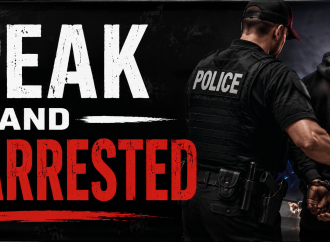
From the reported detention of a visually impaired student who exposed conditions in a university hotel, to the arrest of a journalist covering poor hostel environments, and the alleged suspension and arrest of a student who highlighted the state of a public hospital, the message many citizens are receiving is unmistakable: speaking out may come at a personal cost.
These incidents, alongside others involving critics of political figures, paint a broader picture of a climate where dissent is discouraged and, in some cases, criminalized. Whether each case has additional legal context or not, the perception alone—that criticism invites retaliation—is enough to instill fear. And in a democracy, perception matters.
It is this atmosphere that brings to mind the words of Afrobeat legend Fela Kuti: “If you talk, you die; if you no talk, you still die.” Though spoken decades ago, the sentiment resonates today with unsettling relevance.
Democracy, by definition, is meant to empower citizens. It is a system built on participation, transparency, and accountability. At its core, it assumes that the people are not just subjects of governance, but active stakeholders. When citizens begin to feel unsafe expressing legitimate concerns about public institutions—be it schools, hospitals, or leadership—the foundation of that system begins to crack.
Equally concerning is the perceived silence from those entrusted with leadership. When public officials fail to address such issues openly, it can be interpreted as indifference or, worse, complicity. In functioning democracies, even allegations can trigger investigations, public statements, or, in some cases, resignations. Accountability is not a favor; it is a duty.
However, it is important to recognize that criticism of government actions is not inherently opposition to government itself. On the contrary, constructive criticism is essential for good governance. It helps identify failures, correct course, and ultimately strengthen institutions. A society where citizens can freely speak—and be heard—is one that is more resilient and more just.
The growing concern, therefore, is not just about individual cases, but about the precedent they set. If people begin to self-censor out of fear, important issues will remain hidden. Problems in public services will persist unaddressed. And over time, the distance between leaders and the people they serve will widen.
Nigeria’s democratic journey has not been without challenges, but progress depends on maintaining spaces for dialogue, dissent, and accountability. Citizens must continue to engage responsibly, and authorities must be willing to listen—even when the message is uncomfortable.
Power, after all, does not originate from political offices. It comes from the people—Ndi Madu. And any system that forgets this risks losing not just its legitimacy, but its purpose.
By: Godwin Offor
Related













Leave a Comment
Your email address will not be published. Required fields are marked with *