The question of who stands as the greatest governor in the history of South-East Nigeria remains one of the most debated topics in the region’s political landscape. Over the years, the South-East has produced several influential governors who have left lasting footprints on their states through infrastructure development, economic reforms, education investments, healthcare improvements, and

The question of who stands as the greatest governor in the history of South-East Nigeria remains one of the most debated topics in the region’s political landscape. Over the years, the South-East has produced several influential governors who have left lasting footprints on their states through infrastructure development, economic reforms, education investments, healthcare improvements, and public sector transformation.
While different names emerge depending on political affiliations and personal opinions, many analysts, academics, and citizens often place former Anambra State Governor Peter Obi at the center of the conversation.
The South-East Political Landscape
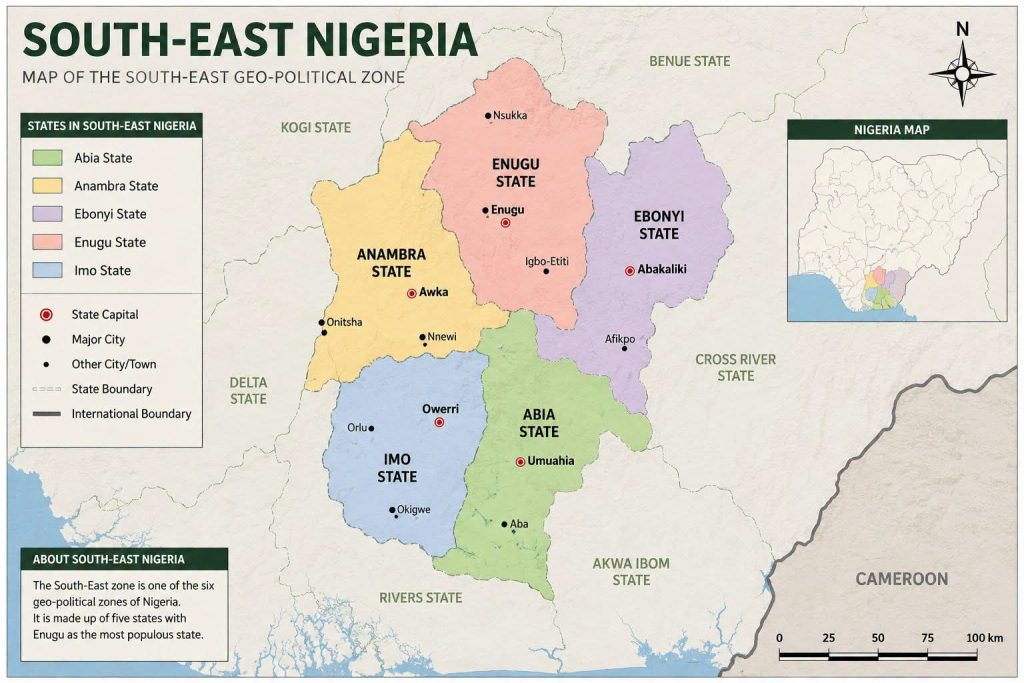
The South-East region consists of five states:
– Anambra
– Abia
– Enugu
– Ebonyi
– Imo
Since Nigeria’s return to democratic rule in 1999, these states have been governed by numerous leaders, each with varying records of achievement.
Among notable former governors are:
– Peter Obi (Anambra)
– Chinwoke Mbadinuju (Anambra)
– Chris Ngige (Anambra)
– Willie Obiano (Anambra)
– Theodore Orji (Abia)
– Okezie Ikpeazu (Abia)
– Orji Uzor Kalu (Abia)
– Sam Egwu (Ebonyi)
– Martin Elechi (Ebonyi)
– Dave Umahi (Ebonyi)
– Sullivan Chime (Enugu)
– Chimaroke Nnamani (Enugu)
– Rochas Okorocha (Imo)
– Ikedi Ohakim (Imo)
Each of these leaders contributed to their states in different ways, making any ranking difficult.
Why Peter Obi Is Frequently Mentioned
Peter Obi’s administration in Anambra State remains one of the most referenced examples of fiscal discipline and prudent management in Nigeria.
Fiscal Responsibility
One of the strongest arguments in Obi’s favor was his emphasis on financial prudence.
Supporters argue that he transformed Anambra from a state struggling with instability into one regarded as one of Nigeria’s most financially stable sub-national governments.
At the end of his tenure, reports indicated that the state maintained significant financial reserves, a rarity among many state governments.
Education Revolution
Education became a major pillar of Obi’s administration.
His government invested heavily in:
– School rehabilitation
– Teacher support
– Educational equipment
– Mission school partnerships
During this period, Anambra repeatedly ranked among Nigeria’s top-performing states in national examinations.
Healthcare Investments
The administration expanded healthcare facilities and upgraded hospitals across the state.
Several communities benefited from new medical infrastructure and improved access to healthcare services.
Infrastructure Development
Although critics argue that his administration focused more on financial management than large-scale construction, supporters insist that Obi delivered strategic infrastructure projects that improved transportation and economic activities.
Road construction, urban renewal, and institutional development formed part of his governance agenda.
Stability and Governance
Before Obi’s emergence, Anambra experienced significant political turbulence.
His tenure brought a level of administrative stability that many observers believe helped create a foundation for subsequent development.
Other Strong Contenders
Dave Umahi
Former Ebonyi State Governor and current Minister of Works, Dave Umahi, is widely praised for transforming Ebonyi through massive infrastructure projects.
His administration delivered:
– Flyovers
– Modern road networks
– Bridges
– Government buildings
– Urban renewal projects
Many residents describe him as the most infrastructure-focused governor in South-East history.
Sullivan Chime
In Enugu State, Sullivan Chime earned recognition for urban development and road construction.
His administration changed the physical appearance of Enugu and improved public infrastructure.
Chris Ngige
Though his tenure in Anambra was relatively short, Chris Ngige is often credited with laying foundations for modern road infrastructure and challenging entrenched political interests.
Rochas Okorocha
Supporters of Rochas Okorocha point to the establishment of numerous educational institutions and public projects in Imo State.
However, his administration remains one of the most polarizing in the region.
Measuring Greatness
The challenge in identifying the greatest governor lies in defining greatness itself.
If the standard is:
– Financial management: Peter Obi often leads the discussion.
– Infrastructure: Dave Umahi is a major contender.
– Urban renewal: Sullivan Chime stands out.
– Political courage and reform: Chris Ngige receives considerable recognition.
Different citizens prioritize different achievements.
The Verdict
While there is no official ranking that can conclusively determine the greatest governor in South-East Nigeria’s history, Peter Obi remains the name most frequently cited in discussions about transformative governance in the region.
His reputation for fiscal discipline, educational investment, and prudent management has continued to influence political conversations long after leaving office.
Nevertheless, governors such as Dave Umahi, Sullivan Chime, and Chris Ngige have also built strong legacies that make the debate far from settled.
Ultimately, the title of “greatest governor” depends on the values one considers most important: infrastructure, financial prudence, social development, or overall impact on the lives of ordinary citizens.
Related














Leave a Comment
Your email address will not be published. Required fields are marked with *